Sunday, October 4, 2009

Socially-Responsible Organizations

In his latest book, Ralph Nadertries his hand at fiction and describes an interesting idea: a handful of disillusioned, elderly billionaires pool their resources to find remedies to not only the problems facing the world, but to the corruption in the political system itself. It begins in 2003 with a fictionalized Warren Buffett who views the disastrous aftermath of Katrina and becomes convinced that the U.S. government has failed its constituents on a fundamental level, and is incapable of ensuring basic rights, not to mention its inability to respond to escalating worldwide problems.

Mr. Buffett decides to tackle this issue head on. He gathers 17 like-minded billionaires (e.g. Bill Cosby, Ted Turner, Yoko Ono, and Leonard Riggio, CEO of Barnes & Noble) and they form a 2-year plan to fix government corruption, make the media more impartial, and address social issues such as healthcare and pollution. They build an infrastructure of consumer watchdog groups, assemble their own media outlet, and recruit spokesmen and demonstrators across the nation. As this is a Ralph Nader-styled utopia, the end result involves many nationalized industries and substantial unionization, but to each his own…

Underlying Theory

Neoclassical economics claims that a large group of varied individuals acting out of self interest can actually lead to a situation that is better than the sum of its component participants: each market player utilizes unique talents and inputs through specialization, and by acting selfishly each player inadvertently benefits others as well. Many college students emerge from Economics 101 believing that the Invisible Hand rocks the American cradle, but never stop to examine the costs of unbridled selfish behavior.

The neoclassical scenario demands some prerequisite assumptions in order to work, one of which is the existence of an impartial regulatory body to enforce civil and property rights. If the referees themselves are utility-maximizing individuals, we have a large moral hazard to deal with. Another assumption is symmetrical information—if both parties understand the design of an automobile, the market will find an appropriate price: but if the manufacturer alone knows that a mild rear-end collision may turn the car into a blazing inferno, the market will probably get the price wrong.

Herein lays the glaring problem with a system that runs on rampant self-interest—you have every reason to lie, cheat, and steal, and you have little incentive to produce real solutions to the world’s problems. There are entire markets built on bait-and-switch tactics: businesses and agencies advertise solutions to problems, but deliver the minimum value for the maximum profit possible. In economic terms, we are a society of rent-seekers.

Application

This theory of non-satiation may not actually be true. Some social scientists claim that many individuals have an ideal lifestyle in mind, and seek to minimize the cost of getting and staying there (for many people, it may not even be an expensive lifestyle.) A corporate analog to this could be a nonprofit entity that aims to change something in the world. It may seek to eliminate war, or just make a better hammer -- the important point is that the bottom line of the organization is to (1) provide its workers reasonable compensation for their contributions, and (2) make the world a better place. The shifting of focus from profit-maximization to maximized effectiveness eliminates some significant moral hazards, and if our social scientists are correct, this type of organization may fit more harmoniously within our instinctual social preferences.

While opinions on Mr. Nader’s politics, or even motives, may differ widely, I think the concept introduced in this book is powerful, and should be examined by all individuals and the organizations they compose. We can follow the path of profit maximization at all costs; or we can take the time to envision the world we want to live in, and then use our talents and resources to make lasting, beneficial changes to it.

Saturday, September 19, 2009

On Not Finishing a Book

Are you the kind of person who checks out dozens of books and only reads a few of them? When I go to the library I feel like a hungry man at an all-you-can-eat buffet: I know that I can only eat so much, and I regret that I can't try everything. I still put too much on my plate, knowing that I will throw away half of it, but I just can't stop trying new foods.


I have been chipping away at a fascinating book about a journalist's travels through Iran, and I was very annoyed the other day to receive an email reminder from the library, telling me that the book was due. I felt this pang of regret, knowing that life would move on and I would probably never finish the book--it would go on the ever-growing pile of unfinished projects, partially-read books, and abandoned hobbies.


Just when I was about to sink into one of those bouts of self-pity I had a realization: Do you have to finish a book to enjoy it? Maybe not. I don't have to know someone's life story to have a meaningful discussion with them. I met a guy from Mali yesterday; we had a great discussion for a few minutes and then went on with our lives. He didn't ask me about my third-grade teacher, and I didn't get his position on Kanye West, but I would still call the conversation a success.


I wonder if we're just too hard on ourselves. I think we often forget that Sherlock Holmes and Hermione Granger are not real people--we don't have to become an expert in everything we're interested in, complete every project we begin, or finish every book we check out. There are so many hours in a day, and when you think about it, years in a life.


I was falling asleep last night, going through the frantic "did I forget anything today" to-do list, and remembered my late library books. I thought to myself, "I met a fascinating book the other day." It was okay that I didn't finish it--there were millions of books still waiting for me, and I would probably meet a few tomorrow.

Jamaican Food


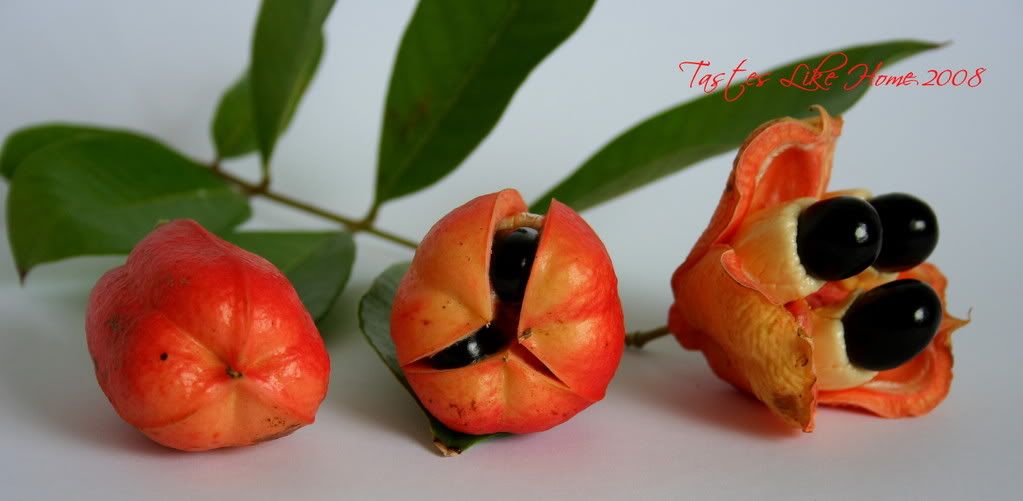
I was browsing around the other day and found this recipe for a Jamaican dish called "ackee and saltfish." It is the national dish of Jamaica, and contains peppers, onions, flaked fish, and ackee, a very strange fruit that apparently resembles and tastes like scrambled eggs!

I decided that I had to try it. I went to an ethnic grocery store looking for ackee, but to no avail. The dish is usually made with salted cod, I assume because two hundred years ago the ships would bring cheap dried fish

from Boston in exchange for sugar cane and rum. Now the cod probably comes from Norway. I settled for two large fillets of frozen grey sole. They were beautiful, white fillets that didn't smell fishy at all.

When I got home I marinated the fish in lime juice, salt, pepper, paprike, and a little allspice (what's Jamaican food without allspice?).

I let that sit awhile and sautéed two bell peppers with an onion and some cayenne pepper in butter. I threw in some thyme, salt, and pepper.

Meanwhile, I cooked the fish and flaked it with a fork. Once it was done I tossed in the vegetables, then scrambled five eggs and gently mixed them in.

For the sides, I nuked a sweet potato for a few minutes, then sliced it up and browned it in butter with salt and pepper. We had a can of mangosteens, so we added them on the side.
Our house smelled wonderful! It was a combination of caramelized onions, thanksgiving yams, and a hint of fried eggs.

I have to put in a note about mangosteens: I've only had them canned, but they are supposedly the most delicious fruit in the world. They look like white peeled tangerines. Each little section tastes halfway between a pear and a grape, with brilliantly sweet citrus overtones. At $4 it was easily the most expensive part of the meal, but definitely worth it.

This was a memorable meal, and very cheap. The fish and eggs went wonderfully with the onions and peppers. The sweet and salty yams provided a wonderful foundation, and a bite of mangosteen added a bit of tang at the end. We fed five people for about $10.

Tuesday, August 18, 2009

Take Back Your Yard

I'm reading a fascinating book called Mirrors of the Unseen: Journeys in Iran, that paints a fascinating picture of Persian culture and scenery. I was stuck by his description of a visit to Isfahan, an ancient city surrounding a public square. Around sunset the writer noticed everyone in the city spreading out blankets in the square. He asked his taxi driver what they were doing and was told "same thing they do every day--eating dinner! Many of them sleep out there too."

After reading that I pictured the standard American family, at best gathering around a dinner table together, at worst eating McDonalds on the couch while watching Friends episodes, and I felt a little lonely. American families are so sequestered, with their social time often scheduled and planned, and I wondered if most Americans secretly long for a simpler, more spontaneous existence.

My wife and I live in an apartment complex with nine other families, and I regret to admit that we barely know most of them. The Isfahan story touched a chord in us, and we decided to make a few changes:

Hold more barbecues--these are no-stress, semi-impromptu barbecues where we provide the fire and everyone brings their own food. We held one the other day and it was great. We even got one of our lesser-known neighbors to come outside and join in.

Put Out the Hammock--I've had this hammock in storage for years and never used it--what a shame! I hung it the courtyard and have been spending more time outdoors recently.

Picnic on the Lawn--We want to start eating dinner on a blanket in the yard. Not only do we have friends frequently walking by, we might be able to get some of our neighbors to join in. It's also fun to eat or season your food right out of the garden.

Yesterday afternoon I was getting a little tired of being indoors, so I went outside to read in the hammock. I'm noticing an interesting shift in my mental processes--I now consider the yard as part of my living space. You usually place a mental wall around the area you designate as "home", and now that wall encompasses the outdoor spaces around our apartment as well. I feel like I've taken my yard back.

Tuesday, July 28, 2009

Grocery Co-op: Cut Your Grocery Bill in Half

We recently discovered our local grocery co-op, and I think it's an amazing way to save money on food. In case you don't know what that is, it's a group of people who pool their money together to buy something straight from a wholesaler in order to save money.

Once a month, the co-op puts together a basket of various groceries and you call in and tell them how many baskets you want (a basket usually includes three kinds of meat, four kinds of fruit, five veggies, and some other stuff). Near the end of the month the co-op places the order directly from wholesalers and distributes it to various drop-off locations. Then you just show up at your local drop-off location and pick up your food.

We have been participating in our local food co-op for three months now, and we just love it. The food is very high quality and we end up paying about half what we normally would at the grocery store. There's a variety of different items and it changes every month, so it's kind of an exciting surprise to see what you will get.

I would highly recommend joining a food co-op. Here's an online directory if your interested: http://www.coopdirectory.org/

Simplifying the Food in Your Life

In a recent blog post I outlined our current problems with food. Basically, we spend too much for it, waste a lot of it, and often opt for fast food whenever we don't feel like cooking.

Being unemployed means we have to downsize our budget, but we see it as an opportunity to start eating inexpensive, simple, healthy food instead of the expensive chemical creations we pick up at the golden arches.

I went on a research trip to Maine a few months ago, and while we were eating sandwiches at this little cafe I noticed the quaint little chalkboard set up with the menu scrawled on it. For some reason that stuck in my mind, and I realized that it was the solution to our food problems--we could keep track of our food on a menu board.

We went to Home Depot and bought a sheet of marker board masonite for $13 and cut it into a few manageable pieces. I found some double-sided adhesive tape and mounted the piece of marker board on the wall next to the fridge. Voila!

We took inventory of our food, listing the meats, fruits, breads, etc. in different sections of the menu board. We also added a section for leftovers so we'd make sure to eat them. We try to keep it updated as we use stuff, but we erase the board and take inventory again once a week.

The menu board has really simplified our cooking. Instead of planning dinner we look at the board and throw together whatever looks good--we might microwave some yellow squash and toss it with pasta and a quickly-sauteed chicken breast and a pear on the side, or we'll broil some cheese on thick pieces of toast with Italian sausage and dice up some peaches and celery sticks to eat with it. Dinner usually takes us all of 15 minutes to prepare and clean up, and it's usually much healthier than what we used to eat.

This also saves us quite a bit of money on groceries. Instead of planning meals and buying those ingredients, we just buy whatever's on sale to fill up slots on the board. Our shopping list might look like this:

milk
eggs
2 bread
3 veggies
4 fruits
2 meat
cheese

and we just look for inexpensive options for each of those.

Another benefit of this is that you can do interesting ethnic foods. We just had a Mexican week--we shopped at one of those really cheap hispanic markets and ate Mexican food--made our own refried beans and ate everything on tortillas. We might do an Asian week next.

Friday, July 17, 2009

David Dunn - Try Giving Yourself Away

I think there must be a universal impulse in man to collect things, and often strange things (I just read a news article about a Belgian who opened up a museum to display his collection of the underwear of famous people.) I have been bitten by the collector bug many times throughout my life, at different times collecting baseball cards, postage stamps, coins and banknotes, rare books, minerals, and I anticipate soon--insects. (I used to think my collecting habits were out of control until I discovered that my brother harbors an irrepressible urge to collect road signs.)

When I was twelve my parents noted my penchant for hording the exotic, and in an effort to promote collecting activities that didn't make a disaster of my room they gave me a book called Try Giving Yourself Away. It catalogs the rather unique collection of a man named David Dunn, who made a hobby of doing small, usually secret acts of kindness. I read the book with delight, as it brought a new, hoard-able thing into my life.

Mr. Dunn relates with pleasure the little, every-day opportunities he discovers to make people around him happy: he'll compliment someone he sees on the street, or give someone a ride home in his car; once he bought some hungry children bags of popcorn from a street vendor; he wrote a letter to his local postmaster thanking him for going out of his way to get a package delivered to him. Most of the things he did were easy and inexpensive, or free, and I'm sure he derived at least as much satisfaction from them as I did from any of my baseball cards.

I won't jump on a soapbox and say that I immediately set out to build a collection of charitable memories, but every once in awhile I'll remember the book and try to do some small thing for someone: I'll let someone with a gallon of milk ahead of me in the supermarket line, or listen attentively as a friend describes in detail something I'm not necessarily interested in. I won't get on a soapbox and claim that this happens constantly, or even that it's a natural impulse, but every once in awhile the book comes to mind and I'll usually see someone in my immediate surroundings who presents an opportunity to add to my uncatalogued collection.

I was hunting around online and just found a free digital version of the book. It was written in the 1940's, so it's in the public domain now. As a little gift to you, here is the link:

http://www.archive.org/details/trygivingyoursel031988mbp

Sunday, July 12, 2009

The Recession

I had a realization the other day. Every time I turn on the news I hear about THE RECESSION. It's like that crazy in-law that moves in and takes over your life. It's in the back of your mind all the time, and you can't help thinking about how much better everything will be when it's gone.

I was listening to NPR and heard a brief interview someone had with a Microsoft exec, who said that the recession should not be seen as a terrible, horrible, no-good, very-bad thing. The recession is a necessary part of a painful healing process for something that is much worse--over-expansion.

Think about it: for the last 20 years we've spent too much money, gotten into too much debt, bought too many houses, and the government has grown too much, spent too much, etc. We need to take a step back and start living lifestyles (individually, societally, and governmentally) that don't spontaneously implode.

They call recessions "corrections" for good reason: we've gotten in over our heads, our expectations are too high, and we need to take a breather. Think of it as an economic Sabbath--a day of rest. Some parts of our economy and culture are being pruned (which is painful), prices are falling to a normal level (which is painful for businesses but good for consumers), and resources are naturally allocating themselves back to where they would be most productive.

Yes, it's painful to be out of a job, or to not be able to make house or car payments, but I think we should see this recession as an opportunity to re-prioritize our lives: start keeping a budget, learn to live inexpensively, sell your iPod on Ebay and break out the Monopoly board instead. Cook dinner together and sit down as a family. Plant a little garden in your backyard. Take a picnic in the park instead of a stroll in the shopping mall.

The media industry that provides all the information on this "horrible" recession is also financed by commercial organizations that only thrive when you are out blowing your money on empty entertainment and things you probably don't need. Of course they're going to tell you how bad things are--it's bad for them, but not necessarily for you. Hole up for a little while, learn how to be frugal, and you should see a much healthier and much more affordable world pretty soon.

Orange Peel Tea

I had a crazy idea yesterday. I was standing on the front porch eating an orange I had sliced up. I was about to go throw away the leftover peels when I glanced at our spice shelf and saw our box of mandarin orange tea. I thought, "what the heck, I got five minutes. Might as well try to make my own."

I put some water on to boil, threw in the orange peels, three hibiscus flowers (you can buy bags of them at hispanic markets--they're cheap), a clove, and some cinnamon. I let it boil for a minute and turned the heat off, letting it steep for about an hour. I strained out the orange peel and other stuff, and sweetened the tea with honey. It had a rich red color from the hibiscus and was much more flavorful than the store-bought tea I was used to drinking.

Alisha and I sat on the porch, watching the rain, drinking homemade orange tea sweetened with honey. It was a very nice moment.

Aguas Frescas--A Great Way to Use Up Fruit

We just discovered a wonderful way to use up fruit that's sitting around. I used to live in a hispanic community in Los Angeles, and every restaurant serves aguas frescas. They're iced fruit drinks stored in huge glass jars--common flavors are horchata (rice and cinnamon), Jamaica (hibiscus flower), and Tamarindo (a sweet/sour paste extracted from the long seed pod of the tamarind tree). They also make them out of almost any kind of fruit.

Here's the recipe--it's as simple as you can get:

2-3 cups fruit (cut up, mashed, or sliced)
3-4 cups water
1/2 - 1 cup sugar

Place fruit in the blender with the sugar and fill to the top with cold water. Blend until you have a liquid consistency. Serve with ice, if desired.

We make this all the time, using whatever fruit happens to be in season. Right now our favorites are watermelon (sandia) and strawberries (fresa).

Note: you can good deals on fresh fruit by visiting hispanic supermarkets.

Food Problems

I must say that like many others I have an interesting relationship with food. I eat too much of it, pay too much for it, and end up wasting half of it. Some months Alisha and I pay as much for food as we do for rent. Here's the usual scenario:

Monday: We go to the grocery store and grab a bunch of stuff that we think we need. We make a few passes through the store, spend WAY too much time there, and when we finally get to the checkout we find that we have $200 worth of groceries in our cart. Even though our car is full of food, we grab some Taco Bell on the way home.

Tuesday: Alisha decides that she wants to make butternut squash soup. We bought the squash yesterday, but don't have celery or carrots. We make another trip to the store. Not only do we pick up the veggies, but we remember that we are out of Corn Pops, buy four boxes of cereal in addition to Corn Pops, and ten other items that we forgot yesterday. The total comes to $75. We're so tired when we get home that we eat Corn Pops for dinner and forget the soup.

Wednesday: We finally make the soup, creating a HUMONGOUS mess in the kitchen. We invite some friends over for dinner and enjoy the soup in those nice square, china bowls we registered for but rarely use because we're afraid of breaking them. After the friends leave our house is a disaster and we have a week's worth of leftover soup.

Thursday: I bring some of the soup to work for lunch. It tastes even better after the flavors mix for a day. I get home from work and we're overwhelmed by the messy house, so we go out to eat at a Chinese restaurant. Those leftovers go into my lunch for tomorrow.

Friday: We're both tired of leftover soup, so it gets pushed to the back of the fridge behind that half-watermelon and is forgotten, eventually spoiling. For some reason we can't think of anything to eat, so we cook bacon and eggs.

Saturday: Finally a day off! I wake up late to a stinky house and tackle the dishes from Wednesday. I discover that the fridge was set too low and most of the fruits and veggies are now frozen. I throw them out and make a new shopping list that we will forget to bring to the store on Monday. I'm a little burned out after spending the entire morning cleaning the kitchen, so we go out for Thai food.

Sunday: Alisha and I sit down and talk about how to use up the food we have and not be so wasteful. We remind ourselves that eating out is expensive and that we should limit ourselves to once a week.

Sound familiar?

Now that we're downsizing our budget we realize that we need to tackle our eating habits and figure out how to actually use the groceries we buy, eat out less, and find a way to cook healthy food that is quick and easy to clean up.

Friday, July 10, 2009

Henry David Thoreau - Walden

You know how some books, like Joyce's Ulysses, have widely-differing effects on people? Some get through twenty pages and call it junk; others call it the most visionary piece of literature in 100 years; there are even some who have devoted their careers to studying it.

Waldenis not that kind of book. It expresses an ideal inherent in all of us--cutting out the meaningless parts of life in order to live to the fullest. I don't think anyone can read Walden without feeling compelled to follow in Thoreau's footsteps in their own way. While some have criticized the book, calling Thoreau a hypocrite, it is because they believe that somehow he didn't completely live up to the ideals he espoused in the book. (I personally believe that they're wrong, but they're entitled to their own opinions.)

Waldenis the story of an upper-middle class guy who spends two years living in a shack by a pond in the woods, planting beans and writing a book. That's all. It's definitely not Clive Cussler, edge-of-your-seat plot material, but passages like this can't help but excite me:

"I went to the woods because I wished to live deliberately, ...to front only the essential facts of life, and to see if I could not learn what it had to teach, and not, when I came to die, discover that I had not lived. I did not wish to live what was not life... I wanted to live deep and suck out all the marrow of life, to live so sturdily and Spartan-like as to put to rout all that was not life, to cut a broad swath and shave close, to drive life into a corner, and reduce it to its lowest terms, and, if it proved to be mean, why then to get to the whole and genuine meanness of it, and publish its meanness to the world; or if it were sublime, to know it by experience, and be able to give a true account of it in my next excursion"

John Krakauer's recent book Into the Wildtells the story of a middle-class young man who abandons society and possessions for the wilds of the Alaskan Denali, eventually dying alone in an abandoned bus. While it sometimes effectively depicts the romance of reckless, carefree living, the book also hints that we live in a shattered society--a place that for many is broken beyond repair and must be abandoned. I prefer the Thoreauvian view--that we need these experiences to focus ourselves on what we truly want in life, and as practice in learning how to appreciate the world around us, so that we can jump back into our lives with renewed focus and actively shape our society. In effect, Thoreau wants us to live deliberately, smelling the roses all the while.

You could say that Thoreau's experiment was a success. After the Walden experience he became an active abolitionist, prolific ecologist, and had a powerful influence on future political reformists with his essay on Civil Disobedience.

There are many other books elaborating on this theme: Robinson Crusoeand The Swiss Family Robinsonare old classics. As a kid I loved Gary Paulson's books (e.g. Hatchet, The Island) and even The Boxcar Children. I'd be interested to hear of any other books that inspired you similarly.

(P.S. I recently discovered Walden: A Fully Annotated Edition. It's a little more than the thrift edition, but a great book to have.)
What This Blog is About

I started this blog to document a "happy crisis" in my life:

Due to some changes within my company I will soon join the growing ranks of the unemployed. I've decided to use this opportunity to return to school and pursue a lifelong dream--I want to manage a non-profit organization. It's not exactly a lucrative career and it will require some lifestyle changes, but I've finally found what I want to do.

As I think about life and the decisions I've been making up until now, I've realized a few frightening things about my behavior:

1. If I don't know what I want in life, I probably won't get it. If you don't know what you want in life, it's easy to cycle between the mundane routines of survival and the expensive habits of avoidance. You hate your job and it takes up most of your time, but it pays the bills, so every weekend you go to stores and buy things to fill the void in your life, or you spend too much money eating out at restaurants. Your credit card is maxed out, so on Monday you go back to work and sign up for overtime. At least there's retirement!

2. When I don't know what I want, I usually seek money, power, and fame as a substitute. If you have enough money, power, or fame you can hypothetically have anything you want--so when you actually do figure out your life, you'll have the means to attain what you want. This is a cop-out approach that rarely works.

3. People gain more money, power, and fame by convincing me that they have the secrets to money, power, and fame. It's a pyramid scheme, plain and simple. By convincing you that your life is incomplete, people who are just as unhappy as you make money by promising to fill the void in your life.

Those are the three biggest things I've noticed recently. Often when I walk by a store or a restaurant and smell the food or see the nice things for sale inside, I begin to feel unhappy about my life. If I can only earn more money so I can eat in that restaurant or shop in that store, I'll feel more complete. Those people inside must be happier than I am. Every TV commercial I see plays on that same mechanism--somehow my life is incomplete, and if I can just buy this thing or own that house or car, I'll finally have arrived in "Happy Valley".

We see constant evidence that much of our culture is just a big, hollow lie, but for some reason we still fall for it. I finally realized why:

We still don't know what we want, so we just decide that we want everything.

We are the hollow men
We are the stuffed men
Leaning together
Headpiece filled with straw. Alas!
Our dried voices, when
We whisper together
Are quiet and meaningless
As wind in dry grass
Or rats’ feet over broken glass
In our dry cellar

-The Hollow Men; T.S. Eliot

This blog narrates my journey to find out how to break this cycle, figure out what we want in life, and to get there as inexpensively as possible. I'll be sharing fun ideas, cost-saving tips, good books I discover, and those little "a-ha" moments that come every once in awhile as we examine the world around us and try to determine our true place in it. I hope you'll come along for the ride and contribute your own ideas.